Tuesday, June 10, 2025

Decline of the Mughal Empire

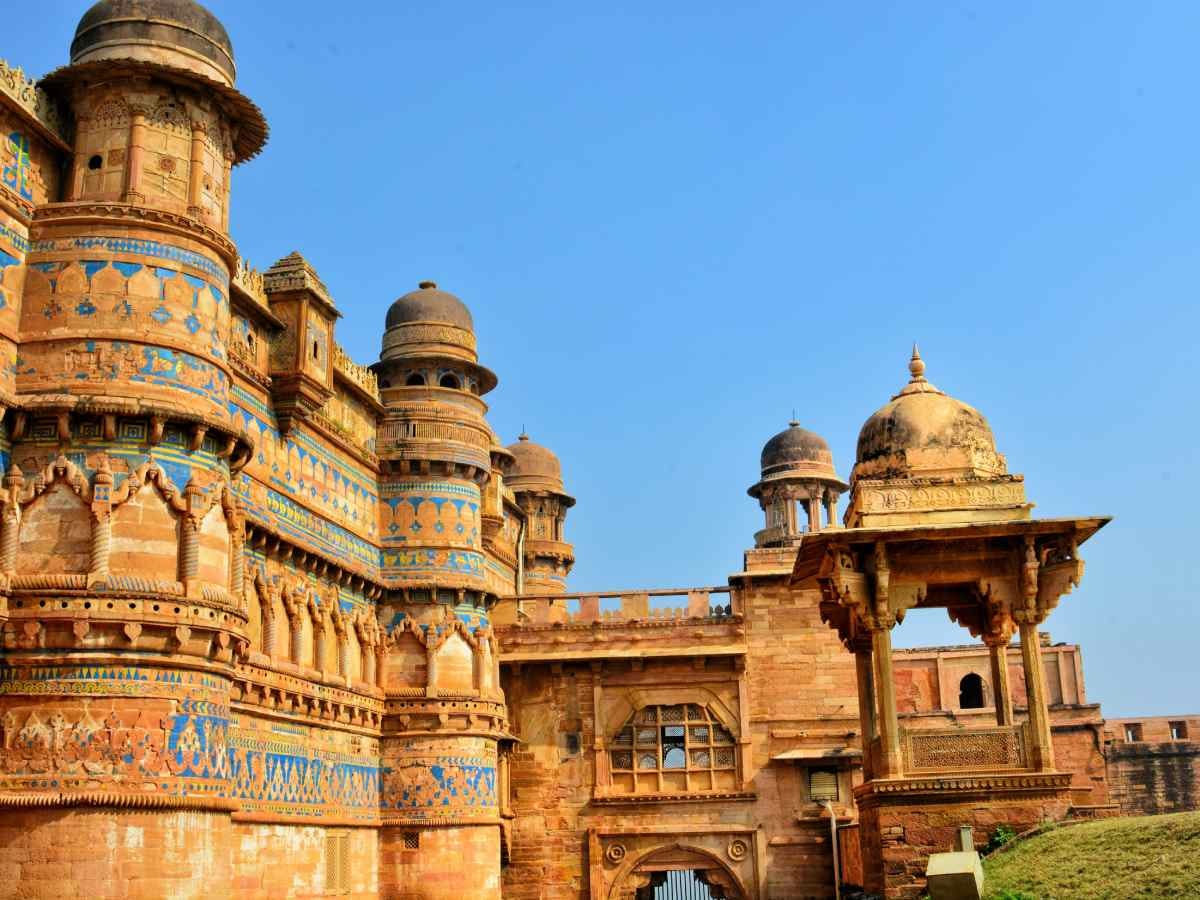
Decline in Mughal Empire in India - Licchavi Lyceum

Introduction:

The Mughal Empire, once one of the most powerful and prosperous empires in the world, began to decline after the death of Aurangzeb in 1707. The decline wasn’t immediate but happened gradually over about 150 years, until the British formally dissolved the empire in 1857 after the First War of Independence.


Main Causes of Decline:

1. Weak Successors:

After Aurangzeb, the empire was ruled by a series of weak, pleasure-loving, or inefficient emperors like Bahadur Shah I, Jahandar Shah, and Muhammad Shah, who failed to maintain authority or control over the nobility and provinces.

2. Overexpansion and Administrative Burden:

Aurangzeb’s military campaigns, especially in the Deccan, drained the empire’s resources. The vast empire became unmanageable and local governors (subedars) grew powerful and independent.

3. Rise of Regional Powers:

New regional powers emerged—MarathasSikhsRajputsJatsNizams of Hyderabad, and Nawabs of Bengal and Awadh—challenging Mughal authority and establishing their own rule.

4. Economic Decline:

Heavy taxation, war expenses, and corruption led to a crumbling economy. The once-flourishing trade suffered, agriculture declined, and peasants revolted.

5. Foreign Invasions:

Repeated invasions by Nadir Shah (1739) and Ahmad Shah Abdali weakened the empire. Nadir Shah’s sack of Delhi was particularly devastating and exposed the empire’s vulnerability.

6. European Interference:

The British, French, and other European powers began gaining a foothold in India through trade. The British East India Company gradually expanded its military and political influence, culminating in control over vast territories.

7. Battle of Plassey (1757) & Buxar (1764):

These battles marked the beginning of British political control. The Mughal emperor became a symbolic figure under British protection.


Final Blow: The Revolt of 1857

The Revolt of 1857, also called the First War of Independence, was the final attempt to revive Mughal authority. After its failure, Bahadur Shah Zafar, the last Mughal emperor, was deposed and exiled to Burma. In 1858, the British formally ended the Mughal Empire and established direct control under the British Crown.


Conclusion:

The fall of the Mughal Empire was not due to one single event but a combination of internal weaknesses, external invasions, and the rise of new powers, especially the British. Its decline marked the end of medieval India and the beginning of colonial rule.

Sunday, June 1, 2025

Mughal Architecture (c. 1550 – c. 1700)


Mughal architecture - Wikipedia

Also known as: Mogul architecture
Region: Northern and Central India

Mughal architecture refers to the distinctive building style that emerged and flourished in India during the Mughal Empire, primarily between the mid-16th and late 17th century. This architectural tradition represents a refined synthesis of PersianIndian, and regional styles, developed under the royal patronage of the Mughal emperors.

Thursday, May 22, 2025

Origins and Early Development


What Can Architecture Teach Us About Gender?The architectural journey began with the tomb of Emperor Humayun in Delhi, started in 1564, which introduced many Persian design elements to Indian soil. However, the first major burst of construction happened during the reign of Emperor Akbar (1556–1605). Noteworthy structures from his rule include:
  • Agra Fort (1565–74)

  • Akbar’s Tomb at Sikandra near Agra

  • Fatehpur Sikri, Akbar’s planned capital, established in 1569, featuring the Jami Masjid (1571) and the massive Buland Darwaza (Victory Gate)

These early Mughal structures primarily employed post-and-lintel construction rather than arches and were built using red sandstone and white marble.

Thursday, May 8, 2025

Golden Age: Shah Jahan’s Era (1628–1658)


JANUARY 22 DEATH Shah Jahan Shahabuddin Muhammad Shah Jahan (5 January 1592  – 22 January 1666) was the fifth Mughal Emperor of India from 1628 to 1658.  Born Prince Khurram , he

Under Emperor Shah Jahan, Mughal architecture reached its artistic peak. The most iconic structure from his reign is the Taj Mahal, a white marble mausoleum that masterfully blends symmetry, Persian aesthetics, and lush garden settings. Other highlights of his era include:

  • Delhi Red Fort (begun in 1638)

  • Diwan-i-Am (Hall of Public Audience)

  • Diwan-i-Khas (Hall of Private Audience) that once held the Peacock Throne

  • Jama Masjid (1650–56) — a grand mosque with a huge courtyard and sweeping stairway

Common features of this period include double domesrecessed archways, and a focus on balance and symmetry, along with exquisite decoration.


Later Mughal Period: Aurangzeb and Beyond

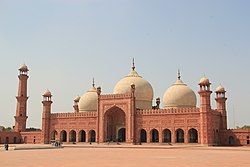
Under Aurangzeb (1658–1707), fewer monuments were built, and the grandeur declined. However, the Badshahi Mosque in Lahore stands out as a major architectural work from his reign. Post-Aurangzeb, Mughal architecture lost its earlier coherence and grandeur.


Monday, April 7, 2025

Humāyūn: The Struggles and Resurgence of the Mughal Empire

The Mughals | Empire-builders of medieval India - The Hindu

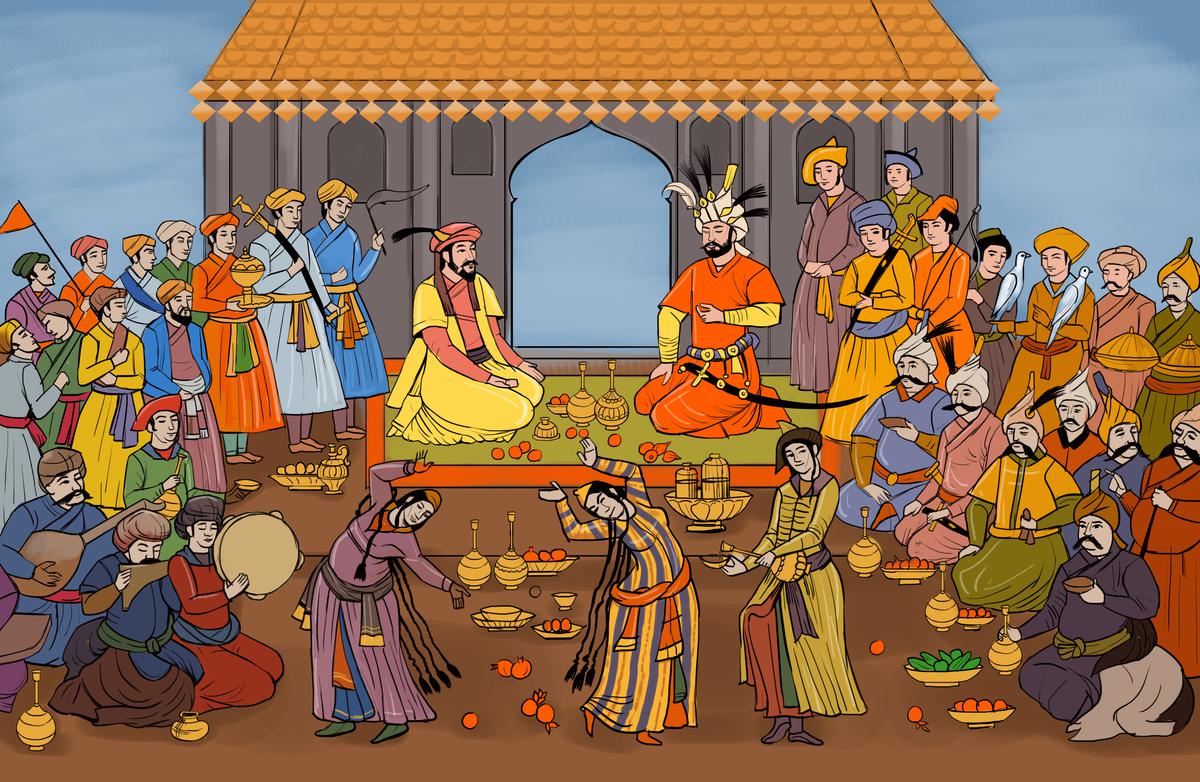
Humāyūn, the son of the great Bābur, inherited an empire full of promise but fraught with challenges. While Bābur’s victories at Panipat (1526), Khanua (1527), and Ghaghara (1529) had established the Mughals in northern India, they had merely subdued—not reconciled—the powerful Afghan and Rajput factions. These groups, though temporarily restrained, remained hostile to Mughal rule, and their resistance would soon surface with full force during Humāyūn's reign.

Challenges from within and outside the Empire

One of the earliest threats Humāyūn faced came from Bahādur Shah of Gujarat, who, aided by Afghan and Mughal exiles, posed a serious challenge in Rajasthan. Despite Humāyūn’s efforts to conquer Gujarat in 1535, the region remained unstable until Bahādur Shah’s death in 1537, which ended the immediate danger. However, this was just the beginning of a much larger crisis.

Meanwhile, in Bihar and Bengal, a formidable figure was rising—Shēr Shah Sūr, an Afghan soldier of fortune. Shēr Shah consolidated his power with remarkable speed, and by 1539, he decisively defeated Humāyūn at Chausa and again at Kannauj in 1540. These defeats led to Humāyūn’s expulsion from India, marking a temporary end to Mughal rule in the subcontinent.

Exile and Return

Fleeing to Persia, Humāyūn found refuge at the court of Shah Ṭahmāsp, who granted him military support in exchange for his loyalty. With Persian aid, Humāyūn embarked on a remarkable journey to reclaim his lost empire. In 1545, he managed to wrest Kandahār from local rulers, and by 1550, after a series of confrontations with his own brother, Kāmrān, he regained control over Kabul for the third time.

The turning point came when internal strife weakened Shēr Shah’s descendants. Taking advantage of this chaos, Humāyūn launched a successful campaign in 1555. In February of that year, he captured Lahore, and by July, after defeating Sikandar Sūr, the rebel Afghan governor of the Punjab, Humāyūn had reclaimed Delhi and Agra. His return to power marked the revival of the Mughal Empire.

Humāyūn’s Final Days and Legacy

Tragically, just a year after his triumphant return, Humāyūn's life was cut short. In 1556, while descending the stairs of his library, he fell and suffered fatal injuries. Though his reign was short-lived, Humāyūn’s efforts laid the groundwork for the continued expansion and flourishing of the Mughal Empire under his son Akbar.

Humāyūn's tomb in Delhi, completed around 1570, stands as one of the first masterpieces of Mughal architecture. The structure, with its grand domes and gardens, would set the stage for the architectural grandeur that would follow in the Mughal era. In 1993, Humāyūn’s tomb was designated a UNESCO World Heritage site, symbolizing his lasting legacy.

Despite the tumultuous and often tragic nature of his reign, Humāyūn’s resilience in the face of adversity and his eventual restoration of Mughal power made him a pivotal figure in Indian history. His life story is one of struggle, exile, and eventual triumph, a testament to the enduring spirit of the Mughal dynasty.

Thursday, September 19, 2019

Aurangzeb: The Peak and the Twilight of the Mughal Empire


The Mughal Empire reached its territorial zenith under the reign of Aurangzeb (1658–1707), who expanded the empire to encompass almost the entire Indian subcontinent. During his rule, India overtook Qing China to become the world’s largest economy, an era of unprecedented economic power. However, despite these triumphs, Aurangzeb’s reign is a study in contradictions.

Unlike his more tolerant predecessors, Aurangzeb was far more conservative in his approach to religion and governance. He reintroduced the jizya tax on non-Muslims, a policy that had been abolished by Akbar, and ordered the destruction of several prominent Hindu temples. Yet, paradoxically, he also commissioned the construction of many Hindu temples and employed more Hindus within his imperial bureaucracy than any Mughal ruler before him. Aurangzeb valued administrative capability over religious affiliation, promoting individuals based on merit rather than creed.

Nevertheless, his reign is often critiqued for undermining the syncretic, pluralistic culture that had flourished under earlier Mughal emperors. His policies led to rising religious tensions and an increasing centralization of power, which strained the traditional decentralized nature of the empire. The once-vibrant tolerance and inclusivity of Mughal rule began to erode under his more orthodox stance.

In terms of military might, the English East India Company faced a setback during the Anglo-Mughal War, signaling that, despite internal strife, the Mughal Empire could still deliver a formidable blow to foreign powers. However, the cracks in the empire’s foundation were beginning to show, and this period marked the start of its gradual decline. Aurangzeb’s reign, while a high point in territorial expansion, also sowed the seeds of the eventual disintegration of the Mughal dynasty.

Sunday, September 1, 2019

The Rise and Glory of the Mughal Empire

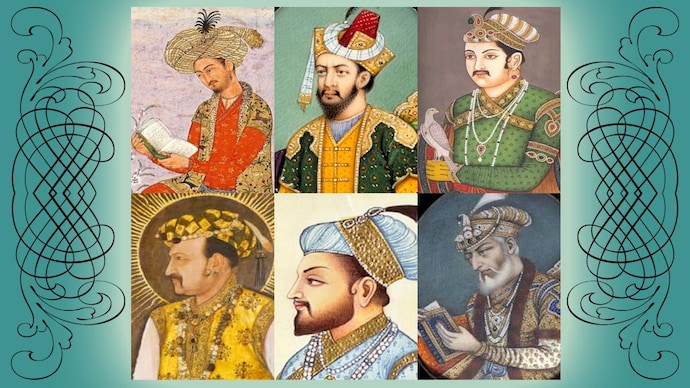
From Babur to Aurangzeb: Facts on the six major Mughal emperors of India -  India Today

Akbar, the great Mughal emperor, strengthened his dynasty both through conquest and strategic alliances. One of his most notable marriages was to Princess Mariam-uz-Zamani, and from this union, their son Jahangir was born. Jahangir continued his father’s legacy, upholding the policies of religious tolerance and cultural integration. By the turn of the 17th century, the Mughal Empire had expanded to dominate nearly the entire Indian subcontinent, cementing its place as one of the largest and most influential empires in history.

The reign of Shah Jahan (1628–1658) is often seen as the golden age of Mughal architecture. Under his rule, the empire saw an unprecedented flourish of monumental construction, the most iconic of which is the Taj Mahal. This magnificent white marble mausoleum, built in honor of his beloved wife Mumtaz Mahal, stands as a testament to both architectural genius and eternal love.

By the year 1600, the Mughal Empire had become a global superpower, not just militarily, but economically as well. It surpassed China to become the world's largest economic entity, controlling an astonishing 24.4% of the global economy. The empire also led the world in manufacturing, producing a quarter of the entire industrial output on the planet.

This remarkable economic and demographic rise was largely driven by Mughal agricultural reforms, which dramatically boosted crop yields and production. At the same time, the empire experienced a significant degree of urbanization, with bustling cities that became centers of trade, culture, and innovation. The Mughal Empire, at its zenith, truly embodied a prosperous and advanced civilization, influencing not only India but the world beyond.

Decline of the Mughal Empire

Introduction: The Mughal Empire, once one of the most powerful and prosperous empires in the world, began to decline after the death of  Aur...